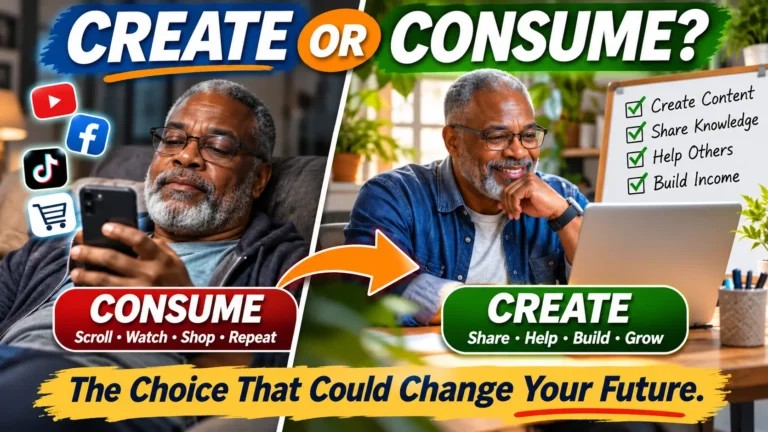
Create or Consume: You Either Are a Consumer or a Creator
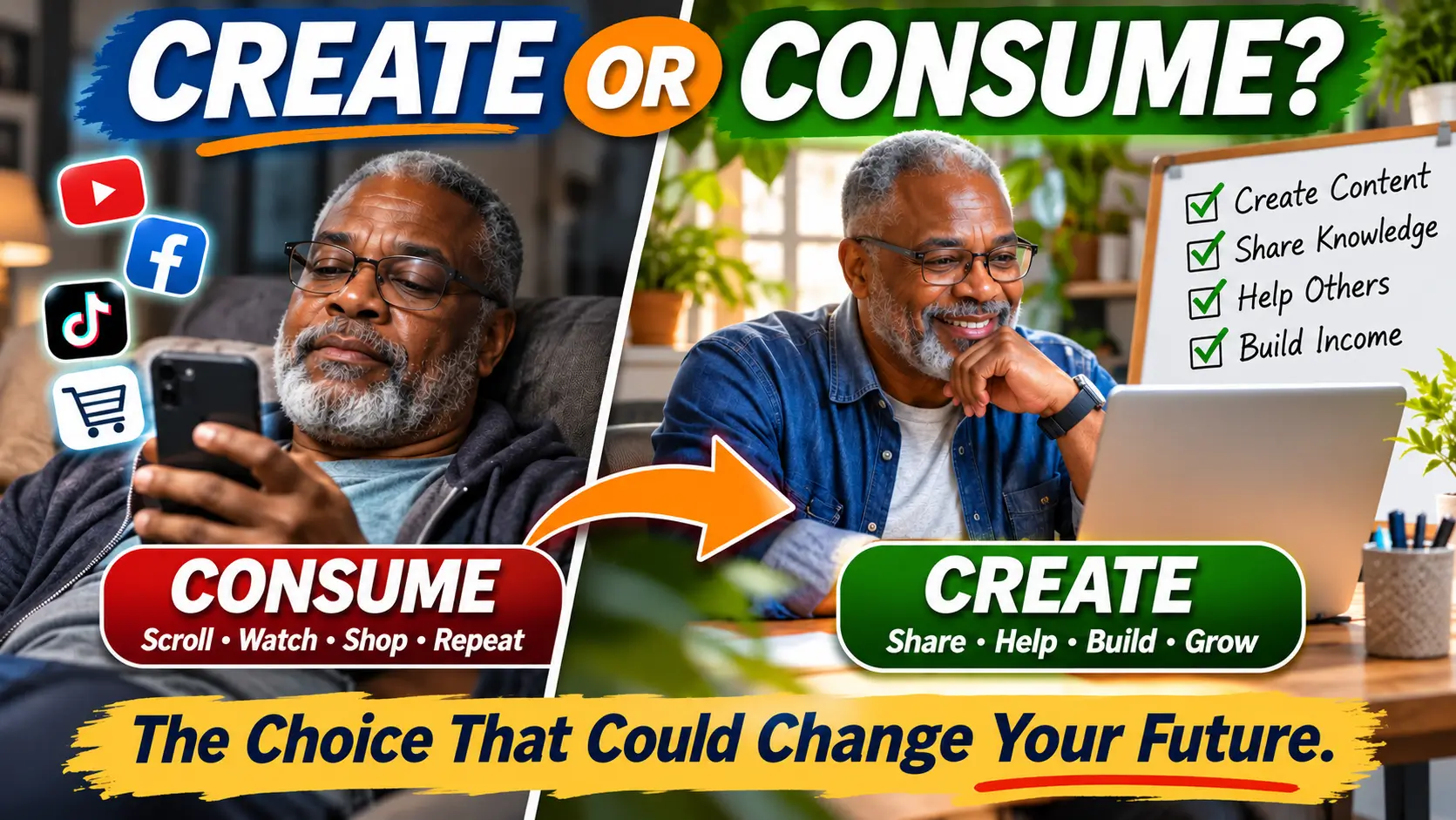
Every day, you make a choice. You can spend your time consuming what others create, or you can start creating something of your own.
Think about your typical day.
You wake up, grab your phone, check Facebook, scroll through a few videos, read the news, watch YouTube, and maybe browse Amazon.
Before you know it, an hour has disappeared.
You’ve consumed information, entertainment, advertisements, and other people’s ideas.
But here’s a question worth asking:
What did YOU create today?
That’s the difference between being a consumer and becoming a creator.
And that difference could change your future.
The World Is Designed for Consumers
Let’s face it. We live in a world that makes consuming incredibly easy.
Everything is just one click away.
- Netflix wants you watching.
- YouTube wants you viewing.
- Facebook wants you scrolling.
- Amazon wants you shopping.
- Advertisers want your attention.
There’s nothing inherently wrong with any of these activities. We all need entertainment, information, and products.
But there’s something important to recognize.
While you’re consuming, someone else is creating.
Someone created that video you’re watching.
Someone wrote that article you’re reading.
Someone built that website you’re visiting.
Someone developed that product you’re considering buying.
And in many cases, those creators have found ways to earn income from their efforts.
The consumer spends attention, time, or money.
The creator builds something that can provide value to others.
The Creator Mindset: A Different Way of Seeing the Internet
Here’s where things get interesting.
You don’t need to be an artist, professional writer, computer programmer, or technology expert to become a creator.
You simply need to start looking at the internet differently.
Instead of asking:
“What can I watch today?”
Start asking:
“What can I share today?”
Instead of:
“What should I buy?”
Ask:
“What problem could I help someone solve?”
Instead of:
“Who should I follow?”
Ask:
“Who could benefit from what I’ve learned?”
That’s the creator mindset.
It’s about shifting from being a passive participant in the digital economy to becoming an active contributor.
And the good news? It’s never too late to make that shift.
You’ve Already Got Something Worth Sharing
If you’re part of Generation X or the Baby Boomer generation, you might think the creator economy belongs to younger people.
After all, they’re the ones making TikTok videos, building YouTube channels, and talking about artificial intelligence.
But consider something.
You’ve spent decades learning things.
You’ve worked jobs, raised families, solved problems, developed skills, made mistakes, and gained experience.
That knowledge has value.
Maybe you know how to repair things.
Maybe you’re great at organizing finances.
Perhaps you’ve learned something about gardening, cooking, travel, retirement, or starting a home business.
Or maybe you’ve discovered a useful tool, service, or opportunity that could help someone else.
Your experience is content waiting to be created.
And today, technology makes sharing that experience easier than ever before.
From Consumer to Creator: Five Simple Ways to Begin
You don’t need to quit your job, invest thousands of dollars, or become an internet celebrity.
Start small.
1. Write Something
Share a helpful tip, personal experience, or lesson you’ve learned.
A Facebook post, blog article, or short newsletter can be your first step into content creation.
2. Share What You Know
Create a simple tutorial explaining how to do something.
You might be surprised how many people are searching for information you already understand.
3. Recommend Something Useful
Affiliate marketing allows you to recommend products, tools, or services and potentially earn commissions when someone purchases through your referral link.
You don’t necessarily need to create your own product.
You can create helpful content that connects people with solutions.
Always be transparent about affiliate relationships.
4. Use AI as Your Creative Assistant
Artificial intelligence has changed what’s possible for everyday people.
AI tools can help you brainstorm ideas, organize information, draft articles, create graphics, and plan content.
You still provide the judgment, experience, and direction.
Think of AI as a tool that helps turn your ideas into something useful.
5. Build Something That Lasts
A helpful blog article, educational video, digital resource, or online course can continue providing value long after you create it.
Unlike an hour spent endlessly scrolling, that same hour spent creating could produce something people discover tomorrow, next month, or even next year.
That’s where the possibilities become exciting.
Create Once. Deliver Value Again and Again.
One of the most interesting aspects of the creator economy is the potential to build assets that continue working beyond the original effort.
Consider a useful article.
You write it once.
Someone discovers it through a search engine.
Another person finds it through Pinterest.
Someone else shares it with a friend.
That article may continue attracting readers over time.
If it includes a relevant affiliate recommendation, a digital resource, or a link to your business, it could potentially generate income.
That’s one of the ideas behind residual income.
You put effort into creating something today that has the potential to provide value tomorrow.
Of course, creating content doesn’t guarantee traffic, sales, or income. Successful online businesses usually require consistency, testing, maintenance, and ongoing learning.
But unlike passive consumption, creation gives you something you can improve, share, and build upon.
You Don’t Have to Stop Consuming. Just Start Creating.
Here’s an important distinction.
Being a consumer isn’t bad.
In fact, creators need to consume information, too.
We read to learn.
We watch tutorials to develop skills.
We research to discover opportunities.
The difference is what happens next.
Consumers stop at consuming. Creators turn what they learn into something useful.
Imagine spending 30 minutes watching videos about a subject you’re interested in.
Now imagine spending the next 30 minutes creating a short post sharing three things you learned, adding your own perspective, and helping someone else understand the topic.
You’ve just moved from passive consumption to active creation.
That’s a powerful shift.
The 30-Minute Creator Challenge
Here’s a simple experiment.
For the next seven days, take just 30 minutes of your usual scrolling time and use it to create something.
It doesn’t have to be perfect.
It doesn’t have to make money.
It doesn’t even have to be published immediately.
Just create.
Write a short article. Record a helpful video. Design a simple graphic. Share a useful tip. Outline a business idea.
At the end of seven days, you’ll have spent three and a half hours creating instead of simply consuming.
More importantly, you’ll have started developing a new habit.
The habit of producing value instead of only consuming it.
The Bigger Picture: Creating Your Own Independence
At Be Independent Today, we believe independence begins with choices.
The choice to learn something new.
The choice to explore opportunities.
The choice to use technology rather than fear it.
And the choice to become a creator instead of remaining only a consumer.
You don’t need to build the next Facebook, write a bestselling book, or become a famous influencer.
You just need to begin.
Because the internet isn’t only a place to spend your time and money.
It’s also a place where you can share your knowledge, build something meaningful, and potentially create new sources of income.
That’s part of what we mean by Life Beyond the J.O.B.
Not overnight riches.
Not magic formulas.
Just ordinary people learning to use extraordinary tools to create more choices for their future.
One Final Question
Tomorrow morning, when you pick up your phone or sit down at your computer, ask yourself:
“Am I here to consume something, or am I here to create something?”
There’s room for both.
But if you want to change your future, perhaps it’s time to change the balance.
Because someone is going to create the content, opportunities, and businesses that shape tomorrow.
Why shouldn’t one of those people be YOU?